

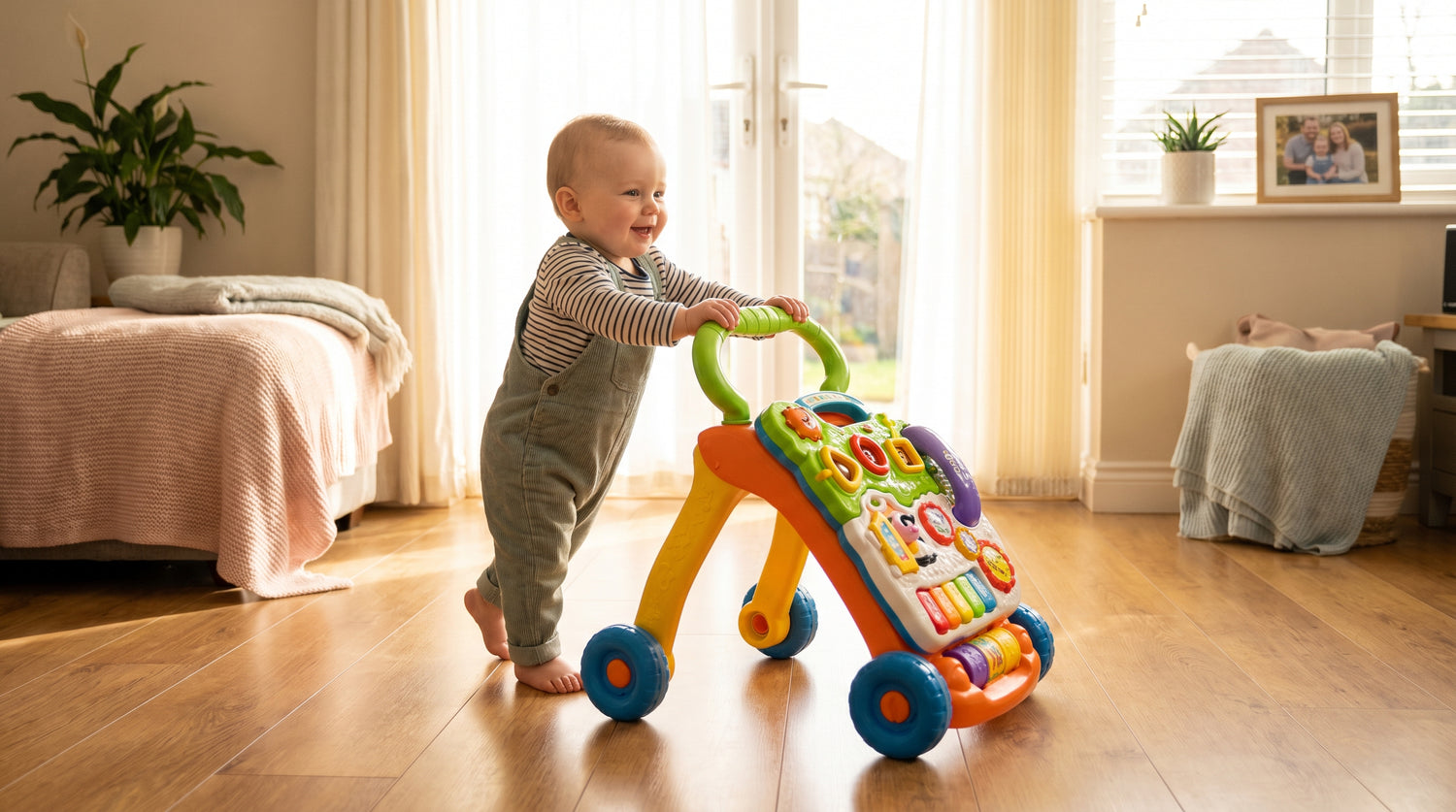
One of the most frequently asked questions about baby walkers is simply: when should I introduce one? The answer involves both your baby's individual development and some practical safety considerations. Here's a complete guide to timing the introduction of a walker correctly.
Understanding Baby Mobility Development
Before a baby is ready for a walker, they need certain physical foundations in place. Walker use requires:
- Full head and neck control
- Sufficient core strength to sit supported
- The ability to bear weight through the legs when held upright
- Alert curiosity about the environment
Most babies develop these capabilities between 4 and 6 months, though 6 months is a reasonable starting point for most. Starting too early — before these foundations are in place — doesn't provide the developmental benefits and can be uncomfortable for the baby.
What Walkers Do (and Don't Do) for Development
Walker play offers several developmental benefits:
- Leg strengthening: Pushing against the floor to move builds the same leg muscles involved in standing and walking.
- Spatial exploration: Mobile babies explore their environment far more actively, stimulating curiosity and problem-solving.
- Upright perspective: Seeing the world from an upright position at the same level as tables and counters is cognitively enriching.
- Hand-eye coordination: Reaching for objects while moving develops key coordination skills.
Walkers do not, however, speed up independent walking. Research shows that regular exclusive walker use can actually slightly delay independent walking by reducing floor time. Balance walker use with plenty of floor-based crawling and standing practice.
Recommended Daily Duration
30–45 minutes of supervised walker use per day is a healthy level for babies of appropriate age and development. This is enough to provide the benefits of upright mobile exploration without reducing the floor time that supports independent motor development.
The Transition to Walking
As babies approach independent walking — typically between 9 and 12 months — they'll naturally begin to use the walker less as standing and cruising (holding onto furniture) becomes their preferred mode of exploration. This is the right progression and doesn't require any intervention.
Introducing First Steps™
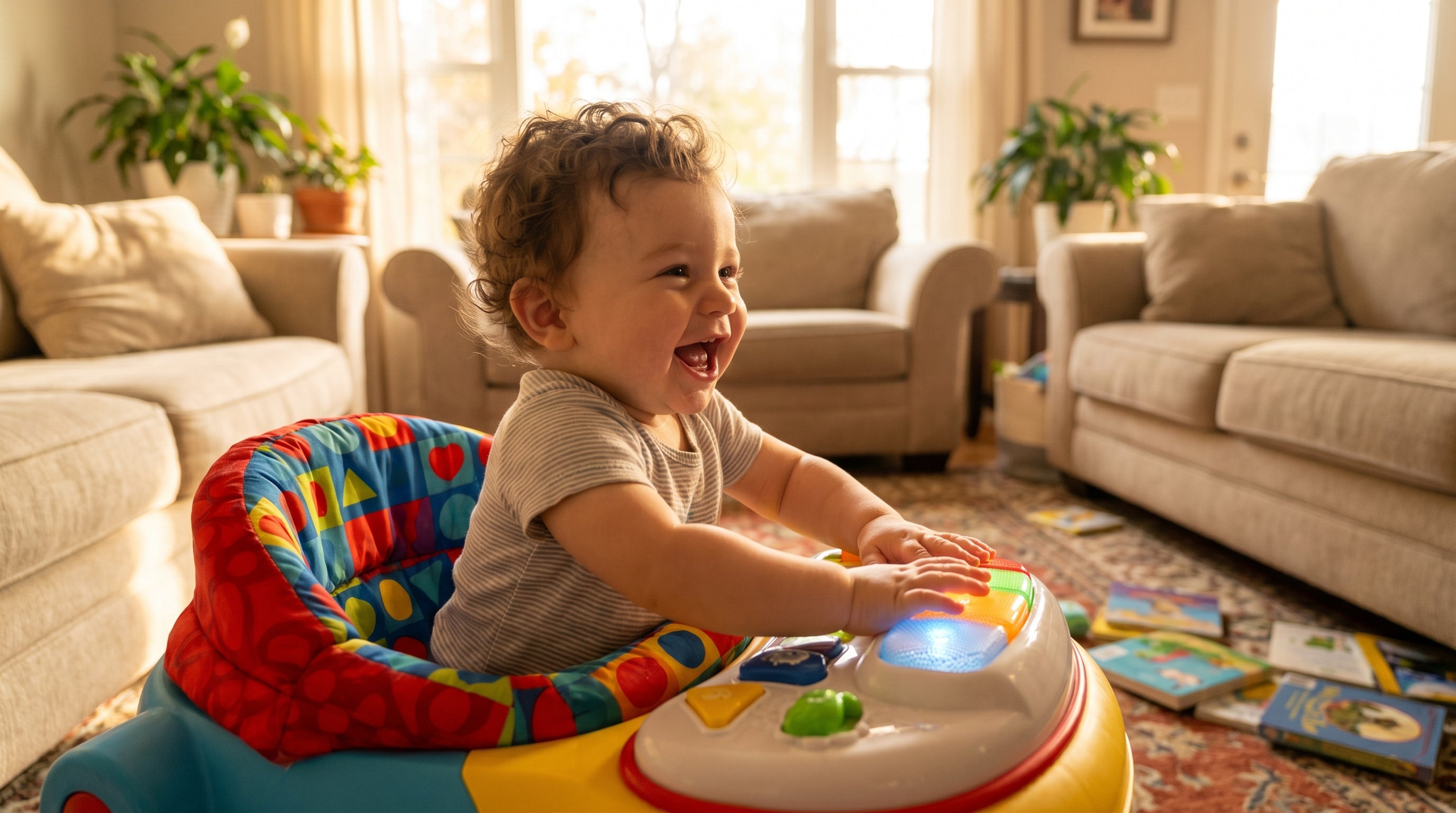
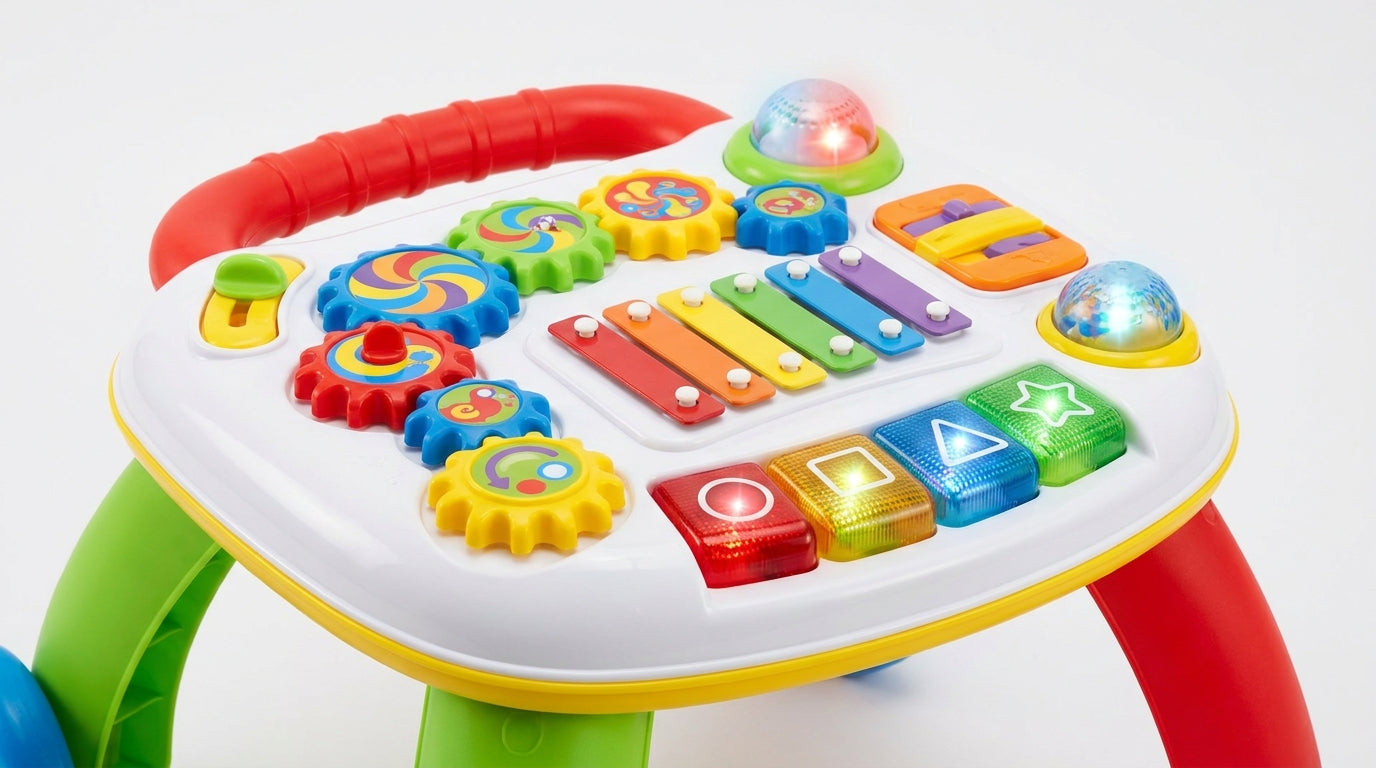
The First Steps™ Anti Rollover Baby Walker is adjustable in seat height to accommodate babies from first use through the transition to walking — so it grows with your baby's development rather than becoming redundant after a few months. It's a genuinely long-use product that delivers value across the walker stage.


Dejar un comentario
Este sitio está protegido por hCaptcha y se aplican la Política de privacidad de hCaptcha y los Términos del servicio.