

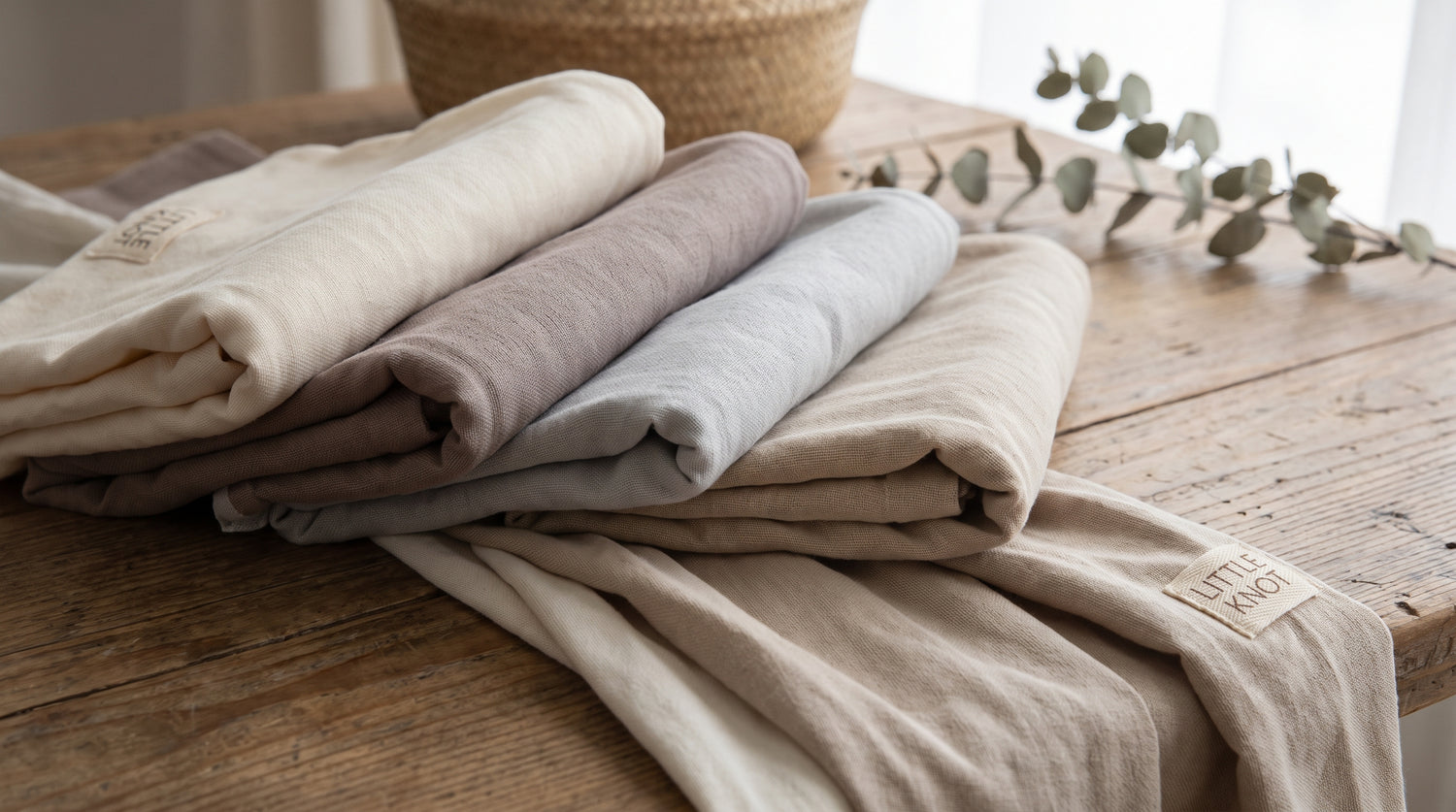
Which Type of Baby Carrier Is Right for You?
The baby carrier market is vast. From ring slings to structured carriers to stretchy wraps, each style has distinct advantages and learning curves. This guide focuses specifically on sling wrap carriers — the stretchy or woven wraps that are particularly popular for newborns and breastfeeding mothers.
1. Stretchy Wrap vs. Woven Wrap
Stretchy wraps (like jersey fabric) are ideal for newborns and beginners. The fabric stretches to accommodate the baby and adjust to the carrier's body, and the learning curve for tying is lower. They're typically used from birth to around 8–10 months, as they can feel unsupportive for heavier babies.
Woven wraps are non-stretchy, supportive for heavier babies, and incredibly versatile — dozens of carry positions are possible. The tying technique requires more practice but offers greater functionality for extended use.
For a new parent looking for a breastfeeding-friendly wrap carrier, a quality stretchy wrap is often the ideal starting point.
2. Fabric and Breathability
You and your baby will be in close contact for extended periods. Look for breathable, natural fabrics — cotton, bamboo blends, or linen woven wraps are popular choices. Avoid thick synthetic fabrics that trap heat for extended summer use. The fabric should be stretchy enough to achieve correct position (for stretchy wraps) but supportive enough not to sag.
3. Length
Wrap length matters for achieving the correct carry positions. Standard wrap lengths range from size 2 (approximately 2.7m) to size 8 (approximately 5.2m). The correct size depends on the wearer's body size:
- XS/S (UK 6–10): Size 4–5
- M/L (UK 12–16): Size 5–6
- XL+ (UK 18+): Size 6–7
If in doubt, err larger — excess fabric can always be tucked.
4. Breastfeeding Compatibility
For nursing mothers, look specifically for carriers described as breastfeeding-friendly. These typically feature lower-positioned passes that allow the baby to be lowered slightly for nursing access while remaining safely supported. Practice the feeding position at home before attempting in public.
5. Safety Standards and Carrier Testing
In many markets, baby carriers are subject to safety standards testing. Look for products tested to EN 13209-1:2015 (EU) or equivalent. This ensures the carrier has been independently tested for safety under load conditions.
6. Learning Curve and Support
All sling wraps require some learning. Look for products that come with clear instructional materials, video tutorials, or access to a babywearing support community. Local babywearing groups (sling libraries) often let you try before you buy — an excellent way to find the right style for you.
7. Washability
A carrier used daily for feeding and carrying gets messy quickly. Machine washable is essential. Check care instructions — most stretchy wraps are machine washable on a gentle cycle, but woven wraps may need more careful handling.
Buying Checklist
- ✓ Correct carrier type for age and weight
- ✓ Breathable, natural fabric
- ✓ Correct length for your size
- ✓ Breastfeeding-friendly design if needed
- ✓ Safety certified
- ✓ Video/tutorial support available
- ✓ Machine washable
Final Thoughts
A quality sling wrap carrier is one of those products that transforms daily life with a newborn. The investment in the right carrier — and in learning to use it well — pays dividends in comfort, convenience, and connection for months to come.
👉 Ready to get yours? Check out the Baby Sling Wrap Breastfeeding Carriers — available now at Baby Bubble Store with fast shipping.
Shop Now →



Efterlad en kommentar
Denne side er beskyttet af hCaptcha, og hCaptchas Politik om beskyttelse af persondata og Servicevilkår er gældende.