

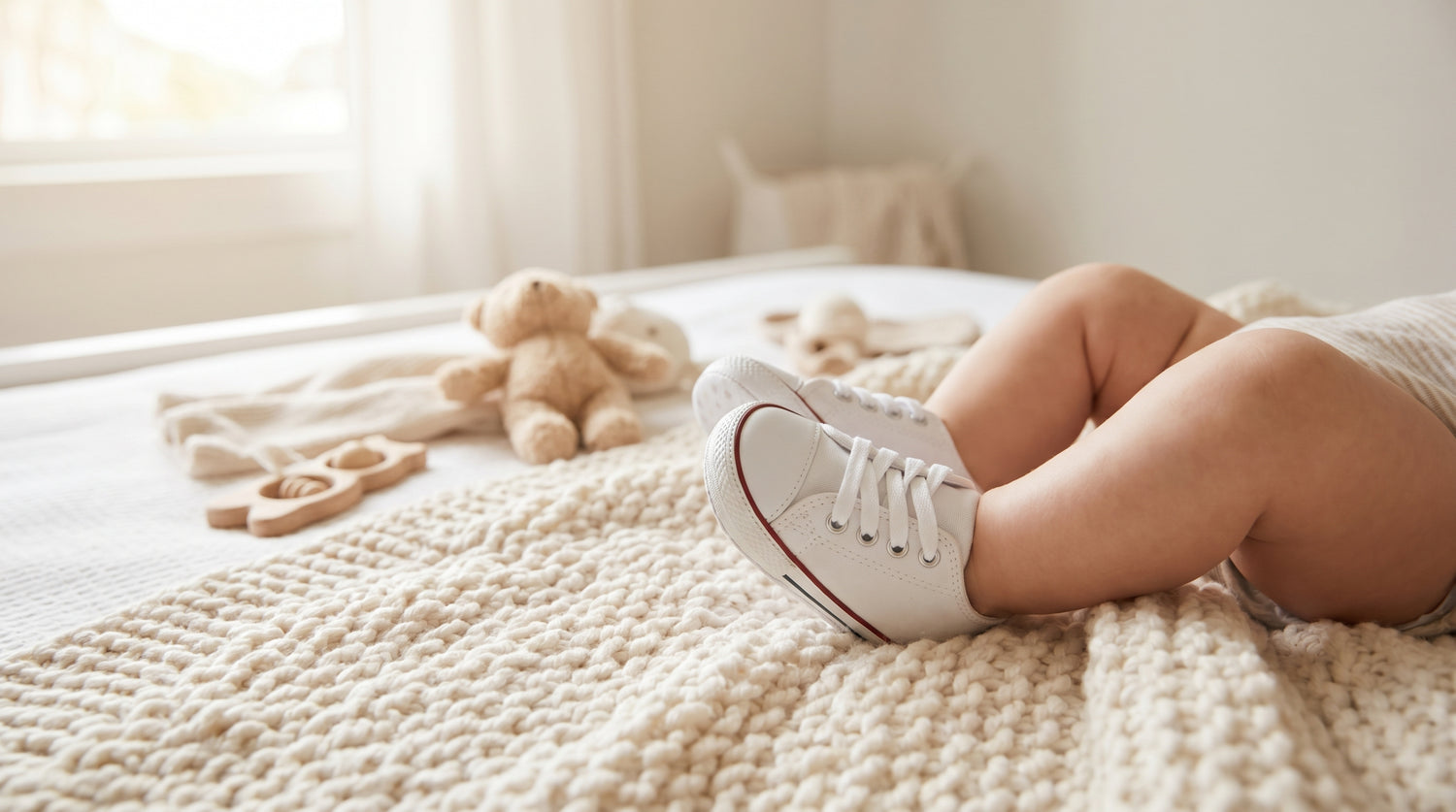
One of the cutest parts of dressing a baby is tiny shoes. But beyond the aesthetic appeal, there's a real question about when — and why — babies actually need footwear. Here's what the evidence and paediatric guidance actually says.
Pre-Walking: Do Babies Need Shoes?
In short: no. Before a baby is standing and taking independent steps, shoes serve no functional purpose from a developmental standpoint. Bare feet or soft non-slip socks are actually preferable during the pre-walking phase because they allow babies to feel the floor surface properly, which supports proprioception — the body's sense of its own position and movement.
That said, soft shoes are perfectly fine for comfort, warmth, and of course — they look adorable in photographs.
When Walking Begins: The Right Time for Proper Footwear
Once a baby begins taking independent steps (typically between 9 and 15 months), footwear becomes more relevant for practical reasons:
- Outdoor protection: Shoes protect feet from rough or sharp surfaces outside.
- Temperature: Enclosed shoes provide warmth in cold weather.
- Grip: A non-slip sole reduces the risk of slipping on smooth indoor floors.
What to Look for in a Baby's First Proper Shoes
Flexibility
Baby feet are still largely cartilaginous (not yet fully bony), and the foot needs to flex naturally with each step. Rigid-soled shoes interfere with natural foot movement and proprioception. The sole should be flexible enough to bend easily when you press the toe toward the heel.
Width
Baby feet are proportionally wide, with a distinctive toe spread. Shoes that are too narrow compress developing toes and can affect natural bone development. Always ensure there's adequate width across the forefoot.
Lightweight
Heavy shoes add load to legs that are still building strength and coordination. Lightweight canvas or soft leather shoes are ideal for new walkers.
Breathability
Baby feet sweat significantly. Breathable natural materials (canvas, soft leather) are much better for foot health than synthetic, non-breathable options.
Baby Canvas Classic Sneakers: The Ideal First Shoe
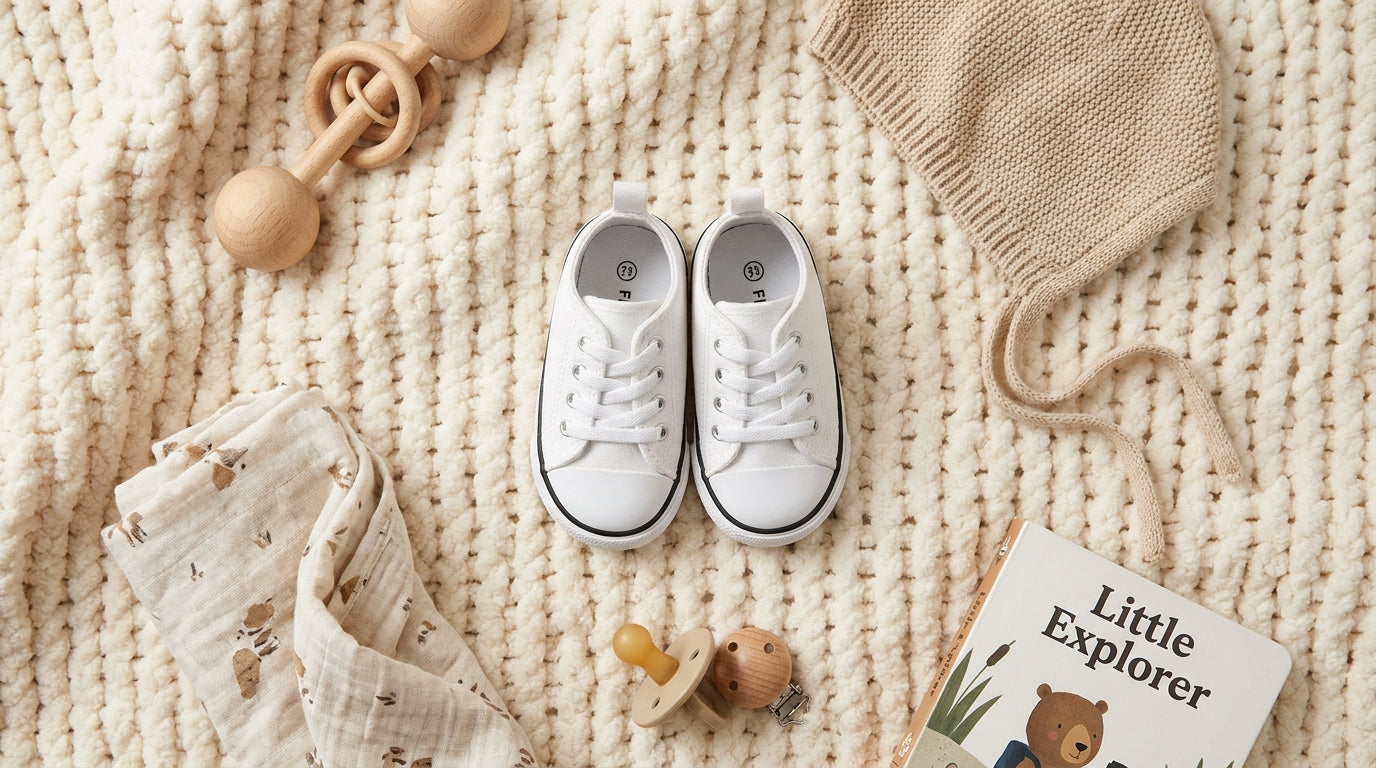
The Baby Bubble Canvas Classic Sneakers were designed with these principles in mind — flexible canvas construction, wide toe box, lightweight design, and a thin non-slip sole that lets developing feet feel the ground naturally. They're the right shoe for babies taking their first real steps.


Lämna en kommentar
Denna webbplats är skyddad av hCaptcha och hCaptchas integritetspolicy . Användarvillkor gäller.