

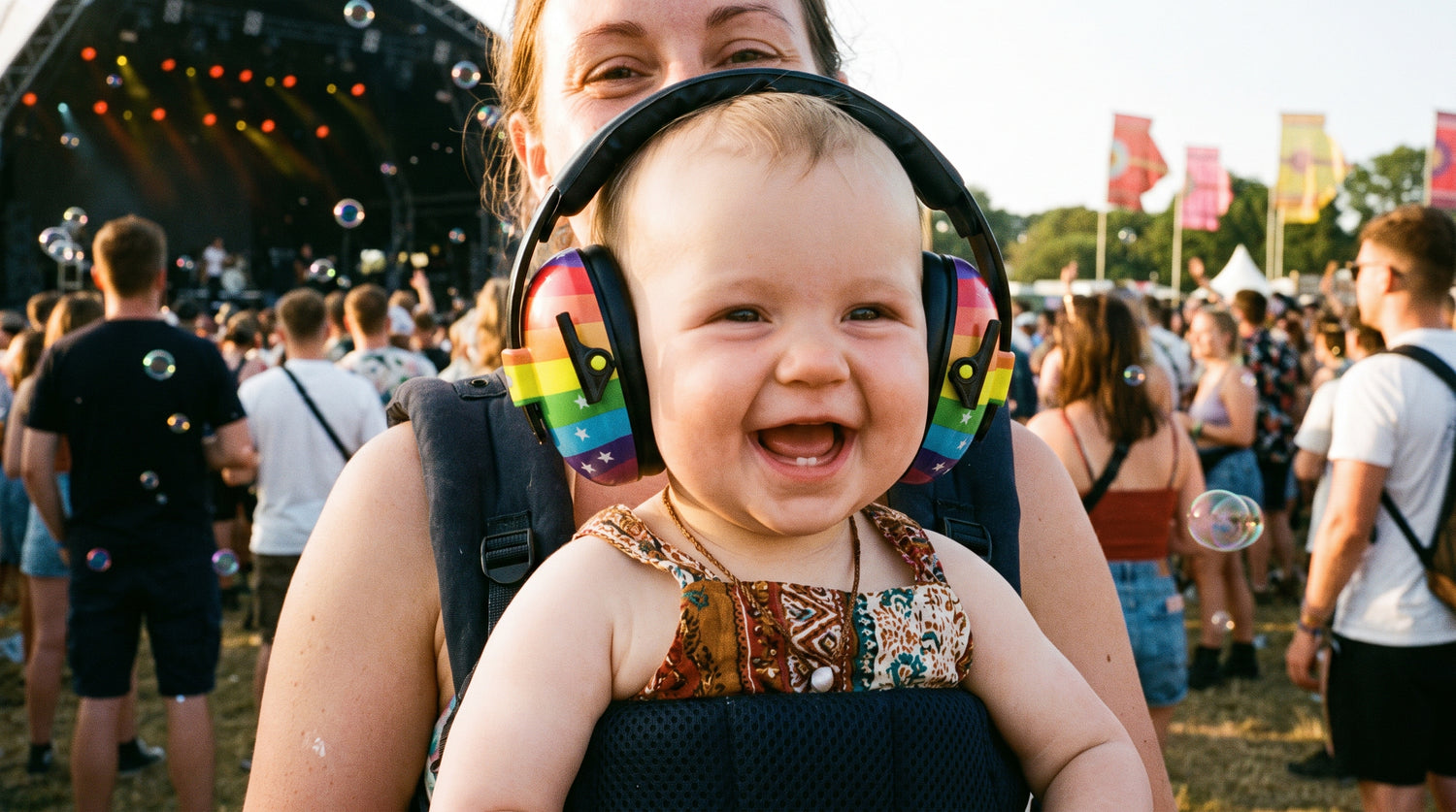
How Sensitive Is a Baby's Hearing?
Babies are born with hearing that is fully functional — and extraordinarily sensitive. While their auditory systems are still developing, their inner ears (cochlea) are actually more vulnerable to loud noise damage than those of adults. The hair cells in the inner ear that convert sound vibrations to electrical signals do not regenerate once damaged. This makes early hearing protection genuinely important.
What Sound Levels Are Safe for Babies?
The World Health Organisation (WHO) recommends that noise levels for children should not exceed:
- 75 dB for extended listening periods
- 85 dB maximum, and only for short periods
For reference, everyday sounds in dB: normal conversation (60 dB), a lawn mower (90 dB), a rock concert (110–120 dB), a firework explosion (140+ dB). Many common family events — music festivals, air shows, sporting events, fireworks displays — easily exceed safe levels for babies.
When Should Babies Wear Ear Protection?
Ear protection is appropriate whenever your baby will be exposed to environments louder than normal conversation levels for extended periods. Common situations include:
- Fireworks and bonfire events
- Music concerts and festivals
- Sporting events in loud stadiums
- Air shows and motorsport events
- Busy construction areas
- Loud birthday parties or celebrations
- Night flights with loud aircraft noise
What Are Baby Ear Muffs?
Baby ear muffs — like the Muffy™ range — are specially designed headsets with soft, padded cups that fit over a baby's ears, reducing the volume of sounds reaching the ear canal by 20–25 dB (NRR rating). They are designed to be lightweight, comfortable, and adjustable to fit newborns through toddlers.
At What Age Can Babies Use Ear Muffs?
Quality baby ear muffs like the Muffy™ are designed from birth. Newborns can wear them at fireworks events or other loud occasions. Always check the specific age guidance on the product you choose.
Signs Your Baby May Be Disturbed by Noise
- Startling or crying at loud sounds
- Covering ears or pulling at them
- Appearing distressed or unusually upset in loud environments
- Difficulty settling after exposure to loud events
These signals suggest your baby is finding the noise level uncomfortable. Ear protection should be used proactively before events, not only once distress is apparent.
Ear Protection Beyond Events
Some families also use baby ear muffs for everyday noisy situations — loud public transport, busy restaurants, or even just during grass cutting at home. While these uses are optional, they demonstrate an awareness of cumulative noise exposure for developing ears.
Conclusion
Baby hearing is precious and irreplaceable. Quality ear protection like the Muffy™ Baby Ear Muffs provides a simple, comfortable way to safeguard your baby's hearing during the loud events that are an inevitable part of family life. Prevention is infinitely easier than treatment when it comes to hearing health.
👉 Ready to get yours? Check out the Comfortable Baby Ear Protection - Muffy™ — available now at Baby Bubble Store with fast shipping.
Shop Now →


Dejar un comentario
Este sitio está protegido por hCaptcha y se aplican la Política de privacidad de hCaptcha y los Términos del servicio.