

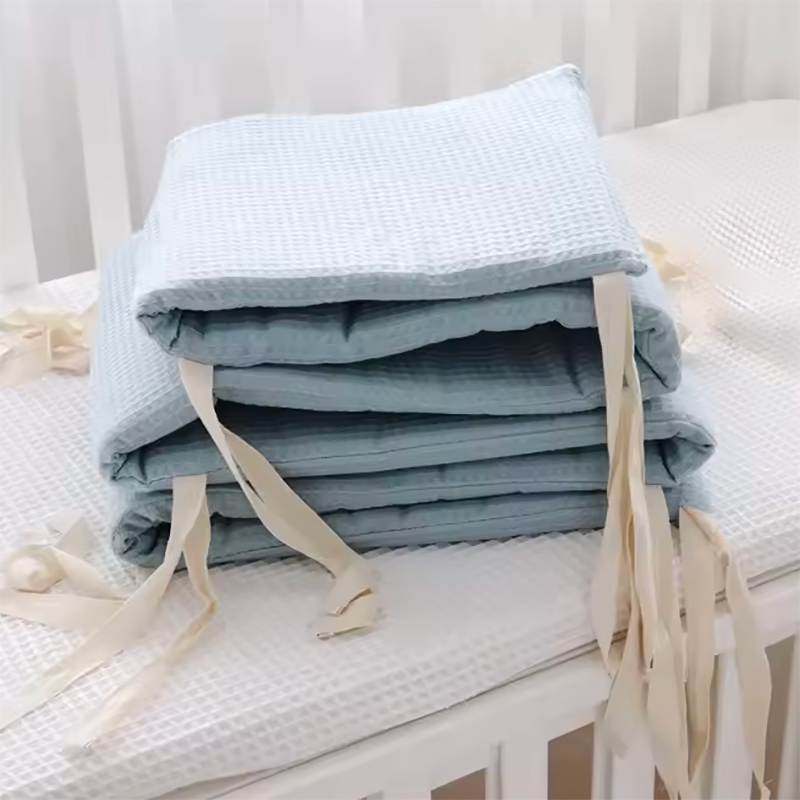
Crib Cushion vs Crib Bumper: What's the Difference and Which Is Safer?
The terms "crib cushion" and "crib bumper" are often used interchangeably — but they describe very different products with very different safety profiles. If you're confused, you're not alone. Here's the definitive breakdown.
The Traditional Crib Bumper
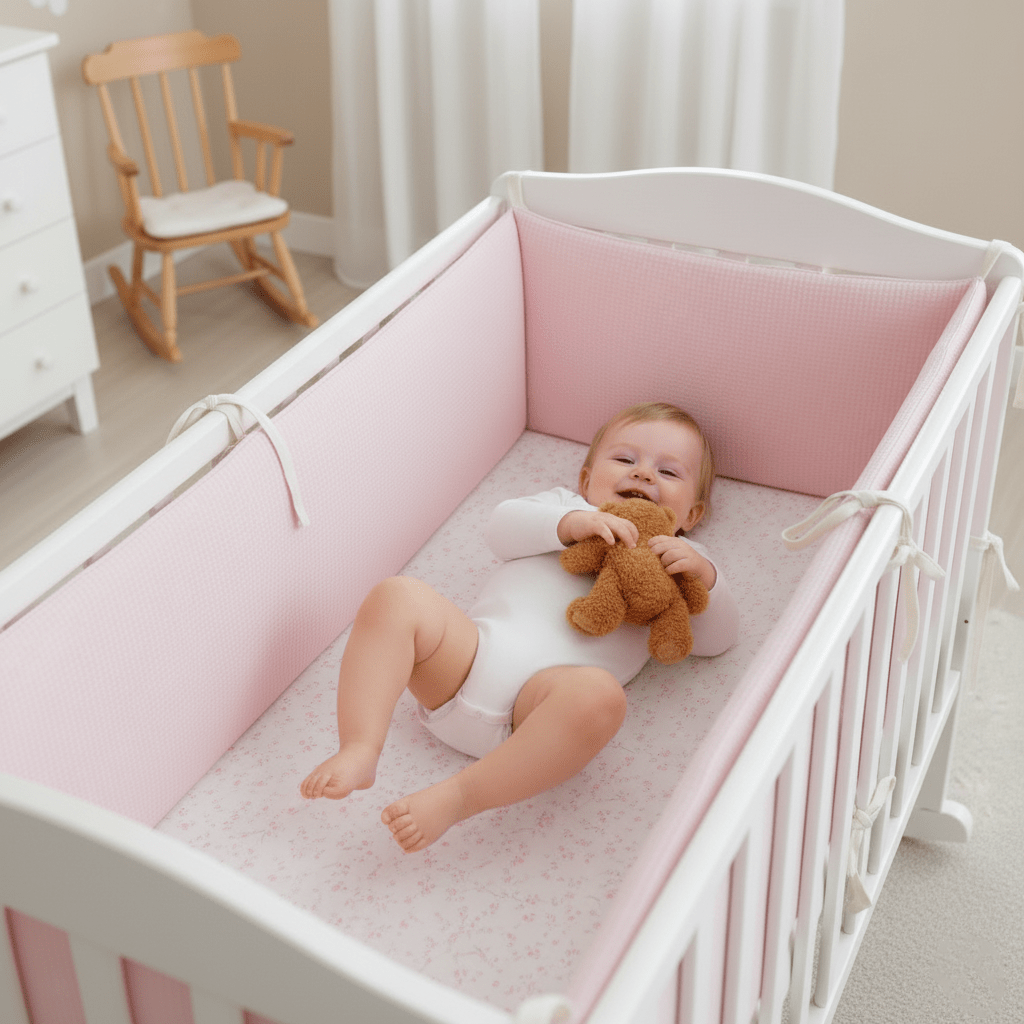
A traditional crib bumper is a padded fabric panel — usually thick, quilted, and tied or velcroed around the inside of the cot — that covers all four sides from the mattress level up, often including behind the baby's head.
What it was designed for:
Originally, bumpers were designed to prevent babies' heads from slipping between the wider slat gaps that older cots had. Modern Australian cot standards (AS/NZS 2172) limit slat gaps to 95mm — a size that prevents head entrapment — which means this original purpose is largely obsolete.
The safety concerns:
- Suffocation — a soft, thick surface near the baby's face poses a risk if baby rolls face-forward into it
- Entrapment — babies can wedge heads or limbs in the space between the bumper and mattress
- Loose ties — tie-on bumpers with long strings create strangulation risk
- Climbing hazard — older babies use firm bumpers as a step to climb out of the cot
For these reasons, traditional padded bumpers are not recommended by Red Nose Australia or most paediatric organisations.
The Modern Crib Cushion
A crib cushion is a different product with a different design philosophy. Rather than wrapping all sides with thick padding, a crib cushion is a slim, firm panel positioned primarily along the long sides of the cot — away from where the baby's head rests.
What it's designed for:
Preventing limb entrapment. From around 4 months, mobile babies push their arms and legs through cot slats and get stuck. This wakes them (and you) up, is painful and stressful, and happens multiple times a night once it starts. A crib cushion creates a barrier along the slats where the body — not the face — is.
The key design differences:
| Feature | Traditional Bumper | Crib Cushion (Cushy™) |
|---|---|---|
| Thickness | Thick and soft (5–10cm) | Slim and firm (2–4cm) |
| Placement | All four sides including behind head | Long sides only, away from head |
| Material | Often fluffy polyester fill | Firm fill, breathable outer |
| Ties | Long tie-on strings | Short ties, velcro, or fitted design |
| Purpose | Aesthetics + outdated head protection | Active limb entrapment prevention |
| Safety concerns | Suffocation, entrapment, strangulation | Minimal when used correctly |
The Cushy™: A Crib Cushion, Not a Bumper
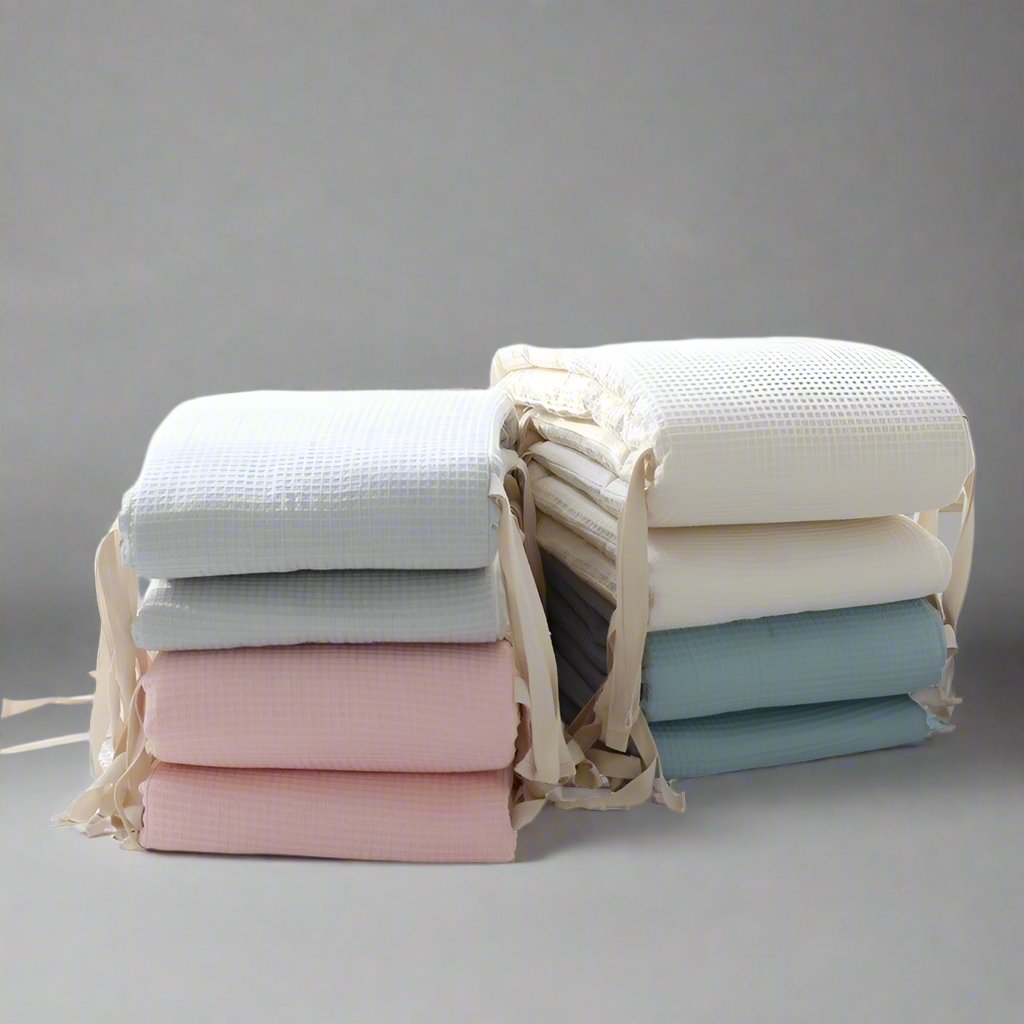
The Premium Baby Crib Cushion - Cushy™ at Baby Bubble is explicitly designed as a crib cushion — not a traditional bumper. The Gray / 240×28cm variant is slim, firm, and positioned along the long sides of the cot to prevent limb entrapment from 4 months onward.
When used as directed — along the sides, away from the baby's head zone — it does not replicate the safety concerns of traditional bumpers.
Which Should You Choose?
The answer is straightforward:
- Traditional thick padded bumper → Don't use. Safety risks are not worth it.
- Modern slim crib cushion → Yes, once your baby is mobile enough (typically 4+ months) to push limbs through slats
- Breathable mesh liner → Also a valid option, particularly for younger babies where even a slim cushion feels like too much
The Bottom Line
The confusion between crib cushions and crib bumpers is understandable — the names overlap and both attach to the cot. But the products are fundamentally different. A well-designed crib cushion like the Cushy™ solves a real problem (limb entrapment) without creating the risks associated with old-school padded bumpers.
If you've been avoiding anything that attaches to your cot out of safety concerns, a slim crib cushion from 4 months is worth reconsidering.
→ Shop the Premium Baby Crib Cushion - Cushy™ in Gray at Baby Bubble


Dejar un comentario
Este sitio está protegido por hCaptcha y se aplican la Política de privacidad de hCaptcha y los Términos del servicio.