

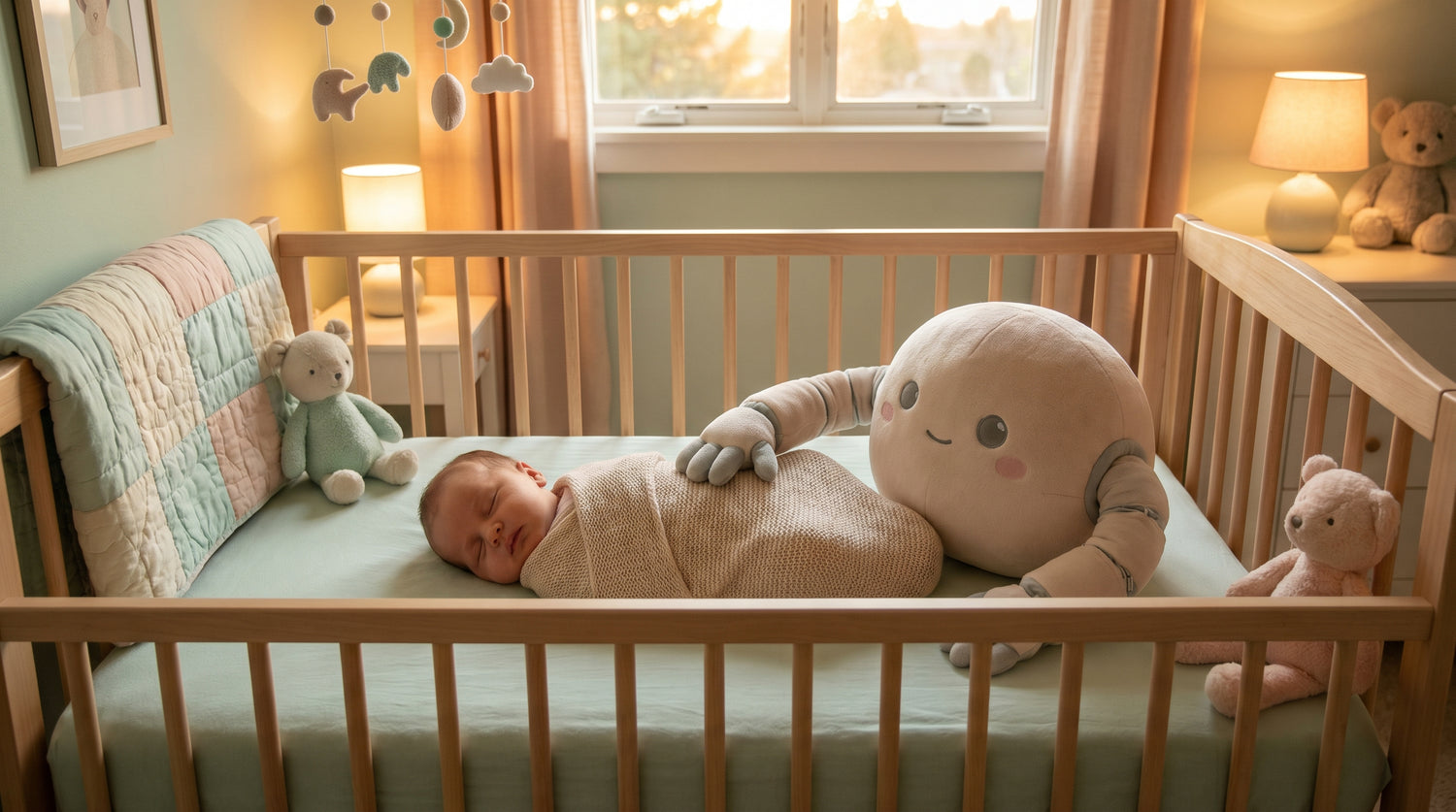
If you’ve ever spent 45 minutes patting your baby to sleep only to have them wake the moment you stop, you’re not alone. Patting is one of the most universally effective sleep induction techniques for young babies — and understanding why it works helps parents use it more effectively (and efficiently).
Why Patting Works
Rhythmic, repetitive stimulation is deeply soothing to newborns and young infants. During pregnancy, babies experience constant motion — the movement of the mother’s body, her heartbeat, and the gentle pressure of being held in a contained space. Patting mimics this familiar sensation, triggering a relaxation response that helps babies disengage from stimulation and drift toward sleep.
Research into infant sleep supports this: rhythmic sensory input at a consistent tempo (around 60-80 beats per minute, similar to a resting heart rate) is particularly effective at reducing arousal and facilitating the transition from wakefulness to sleep.
The Problem with Manual Patting
Manual patting is effective but exhausting — and inconsistent. As parents fatigue, the rhythm changes, the pressure varies, and eventually the patting slows and stops. Babies are sensitive to this inconsistency and often rouse as soon as the stimulation changes. The result: more time spent settling, more interrupted nights, more parental exhaustion.
How Patting Devices Work
Electronic patting devices replicate the rhythmic patting motion mechanically, maintaining a consistent beat for as long as needed. The Baby Bubble Sleep Patting Pillow with Remote Control is designed specifically for this purpose — it delivers a gentle, consistent patting rhythm that mimics a parent’s hand, without requiring a parent to be physically present.
The remote control function is particularly valuable: once your baby is settled and drowsy, you can gradually reduce the patting intensity and then switch it off entirely — all without moving, without leaning over the crib, without risking the vibration of footsteps on the floor. The transition from device-assisted sleep to independent sleep happens seamlessly.
Building Independent Sleep Skills
The goal of any sleep aid, including a patting device, should be to support the development of independent sleep skills — not to create permanent dependence. Used thoughtfully, a patting pillow can help babies learn to associate rhythmic sensation with sleep onset, eventually building the ability to self-settle without assistance.
Most parents find that consistent use over several weeks leads to noticeably shorter settling times and more reliable independent sleep onset. The device acts as a bridge rather than a permanent crutch.
When to Introduce a Patting Device
Patting devices are generally suitable from birth. Early introduction means your baby learns to associate the device with sleep from the very beginning — making the association stronger and more reliable. The Baby Bubble Sleep Patting Pillow is safe for use from the newborn period and adjustable in both rhythm and intensity to suit your baby’s preferences as they develop.



Leave a comment
This site is protected by hCaptcha and the hCaptcha Privacy Policy and Terms of Service apply.