

Is Your Baby Ready for Potty Training?
Potty training is one of the major developmental milestones of early childhood, and getting the timing right makes the whole process significantly easier. Most children show readiness signals between 18 months and 3 years, though there's wide variation — every child is different. Starting before readiness signals appear rarely speeds things up and often makes the process harder.
Signs Your Child Is Ready
Watch for these readiness signals before introducing the potty:
- Staying dry for at least 2 hours at a time
- Showing awareness of being wet or dirty — looking uncomfortable or telling you
- Showing interest in the toilet or following caregivers to the bathroom
- Being able to follow simple two-step instructions
- Able to pull pants up and down with some help
- Expressing the need to go before it happens (even sometimes)
When you see several of these signals consistently, it's a good time to introduce a potty or toilet training seat.
Choosing the Right Training Seat
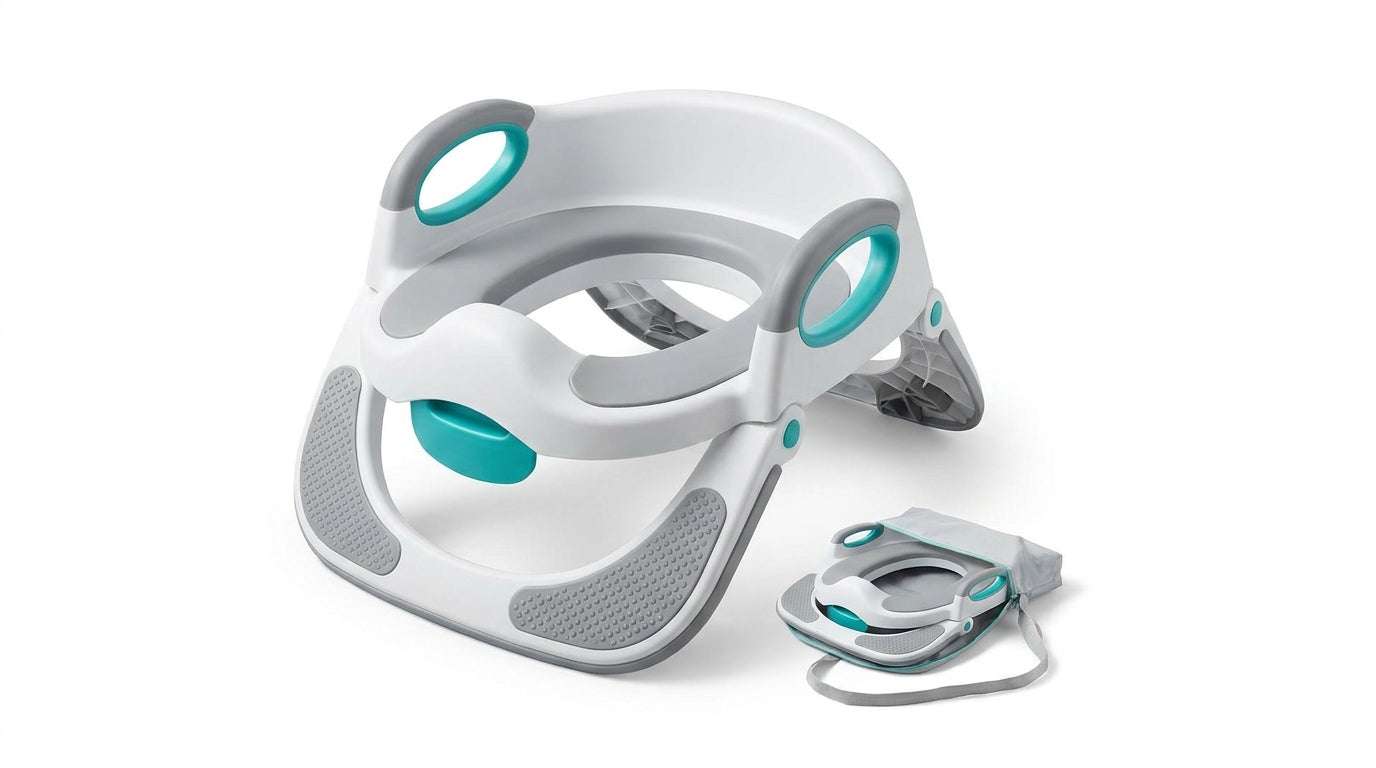
A portable baby toilet ring training seat sits on top of a regular toilet, providing a smaller, baby-sized opening that toddlers can sit on comfortably. This approach has the advantage of going straight to the regular toilet rather than transitioning later from a separate floor potty. Benefits include:
- No second transition needed (floor potty → big toilet)
- Teaches the toilet as the normal place from the start
- Portable versions can be used at home and away
Step-by-Step: Getting Started
- Introduce the concept: Read books about potty training, talk positively about using the toilet, and let your child watch you or older siblings
- Introduce the seat: Let your child sit on the training seat fully clothed first to get comfortable with it
- Establish a routine: Sit your child on the toilet at regular intervals — after waking, before and after meals, and before bed
- Celebrate successes: Enthusiastic praise for any attempt or success. Sticker charts work brilliantly for many toddlers
- Handle accidents calmly: Accidents are inevitable. Never punish or show frustration — simply clean up calmly and carry on
Tips for Success
- Let your child choose their training pants or underwear — ownership of the process helps
- Avoid training during stressful times (moving house, new sibling, starting nursery)
- Use a step stool so feet are supported and your child feels secure on the toilet
- Keep sessions short — 5 minutes is enough. Never force your child to sit longer
- Portable training seats are ideal for travel and visiting family
How Long Does Potty Training Take?
Most children master daytime dryness within a few weeks to a few months of starting training at readiness. Night-time dryness typically comes later — often 6 months to a year after daytime training. Be patient, stay positive, and follow your child's lead.
The Bottom Line
Potty training is a process, not an event. Starting when your child shows genuine readiness signals, using the right equipment (including a comfortable training seat), and maintaining a positive, pressure-free approach will make the transition as smooth as possible for both of you.
👉 Ready to get yours? Check out the Baby Portable Toilet Ring Training Seat — available now at Baby Bubble Store with fast shipping.
Shop Now →


Hinterlasse einen Kommentar
Diese Website ist durch hCaptcha geschützt und es gelten die allgemeinen Geschäftsbedingungen und Datenschutzbestimmungen von hCaptcha.